The crypto market has witnessed yet another dramatic episode, and this time, the spotlight is firmly on RAVE, the native token of RaveDAO. In a matter of just a few days, this token has transitioned from a topic of conversation to a lesson on crypto volatility. The token crashed a jaw-dropping 95% to $0.5 (~₹46.8), only to recover with a over 260% surge to $1.50 (~ ₹126) in the last 24hrs. As retail sentiment has just changed to extremely bullish, investors worldwide are posing only one important question: should they buy RAVE?
How did RAVE crash so dramatically?
The token shot up from roughly $0.25 (~₹21) to $27.30 (~₹2,285) in just nine days; a staggering 10,800% rally. Yet, what rises so unnaturally is likely to fall down at an even more unnatural rate. RAVE plummeted from $26 (~₹2,175) to nearly $0.5 (~₹46.8) within 24 hours, wiping out close to $6 billion (~₹50,200 crore) in market cap. Only around $52 million (~₹435 crore) in liquidations could account for this, leaving analysts confused by the sheer scale of destruction.
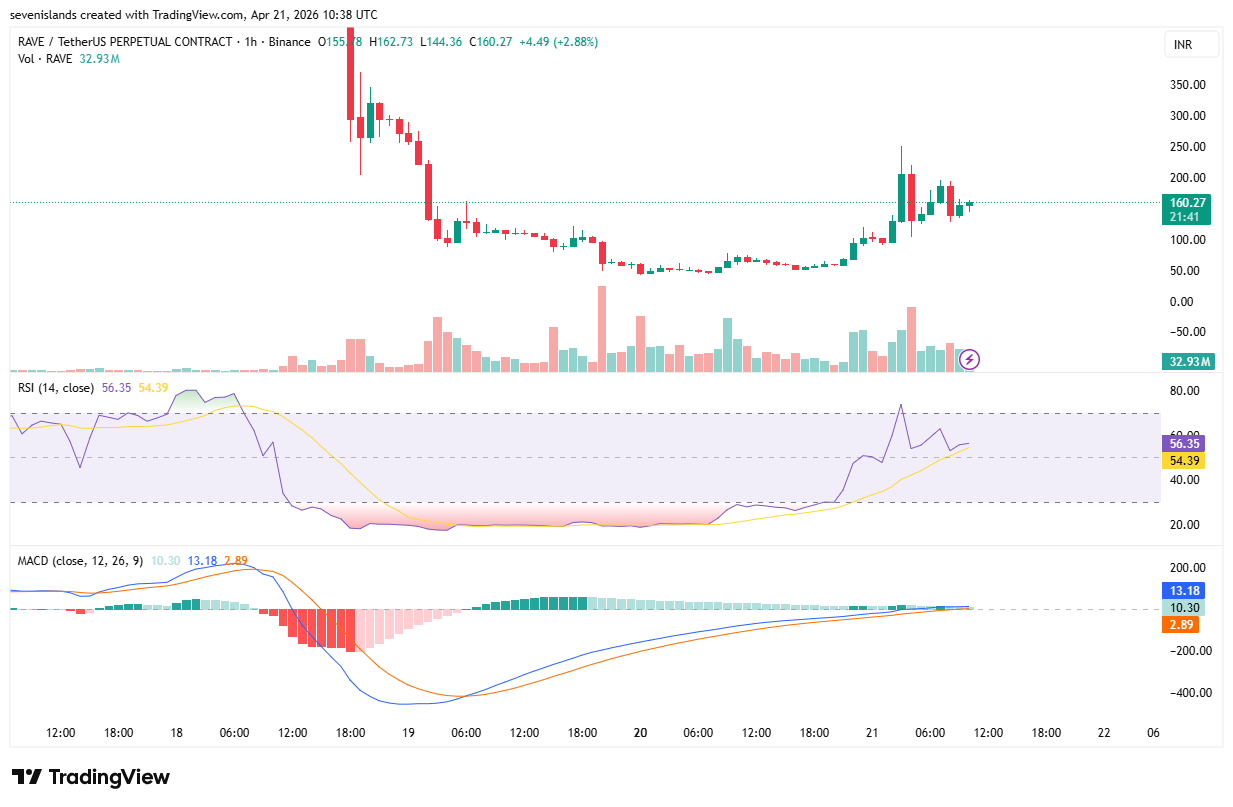
As far as the current price movement is concerned, this token has experienced a surge of 137.62% in the past 24 hrs. and is currently trading around ₹157.70.
Were there any red flags behind the collapse?
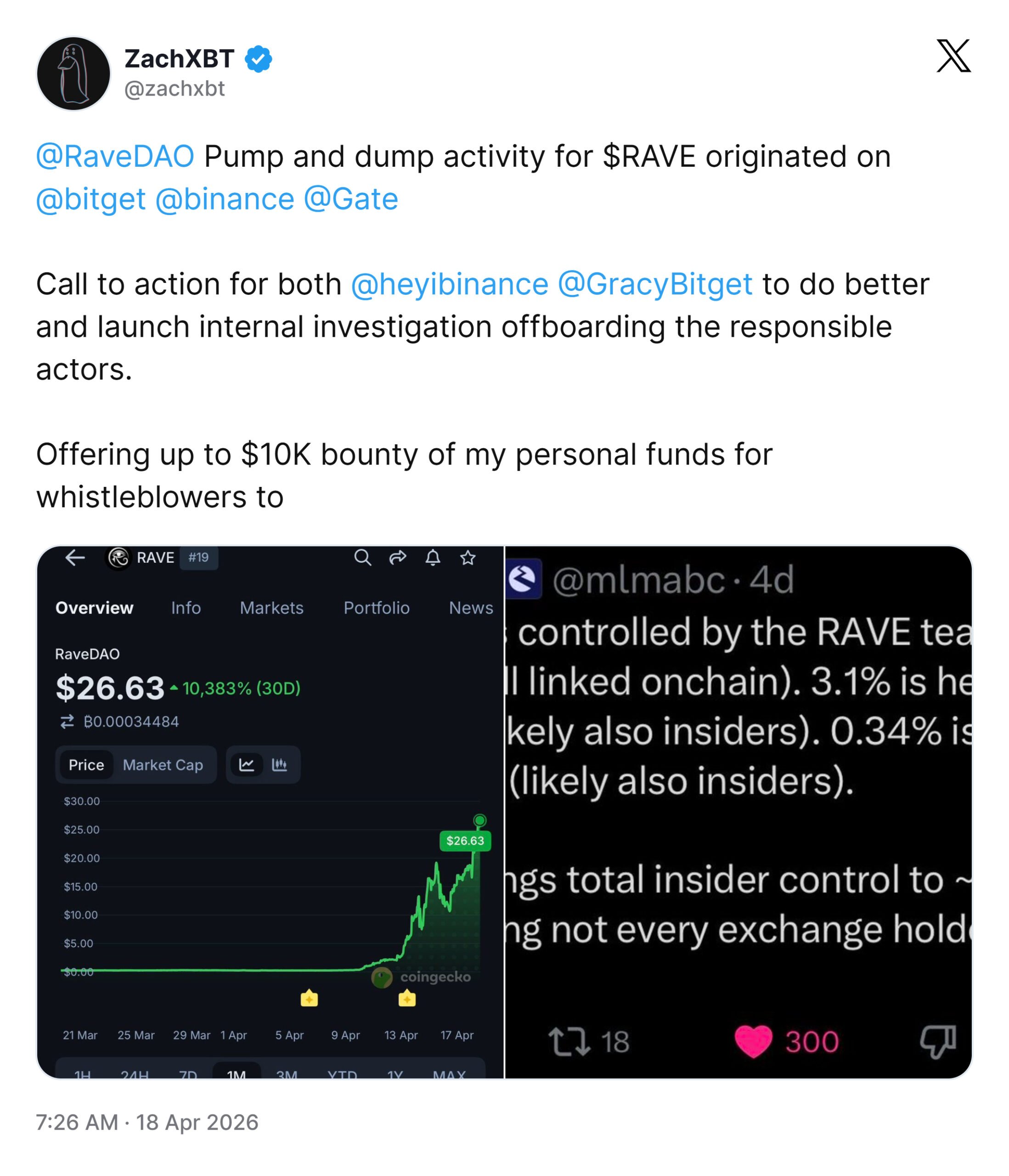
The collapse was triggered by a tweet by on-chain investigator ZachXBT claiming that the project was operating a pump-and-dump scheme. His examination showed that nine wallets associated with the initial phase of distribution of the project controlled almost 90% of the entire supply of RAVE. This massive concentration placed a few insiders with the hypothetical ability to play with prices at will.
ZachXBT also reported high token transfers to exchanges around the time the rally kicked off, a typical insider selloff pattern when retail investors start investing. He offered a $25,000 bounty ( starting $10,000) to any person with verifiable insider information and this discovery was like wildfire in social media and trading forums.
Did exchange probes make the situation worse?
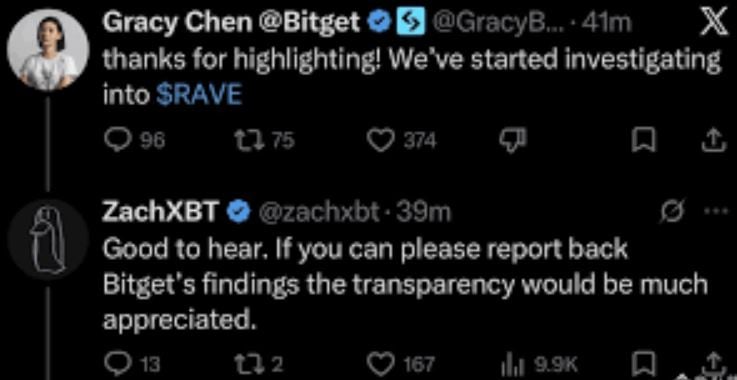
Instead of soothing the panic, the investigation by big exchanges only intensified the sell-off. Binance co-CEO Richard Teng said the exchange was investigating RAVE trading activity and Bitget CEO Gracy Chen said the same. The initial suspicions were also associated with Gate.io.
These announcements were read by investors not as assurances but as a testament that something had gone terribly wrong with the token. Selling accelerated, and the floor just fell away. The short squeeze that had been supporting the prices in the rally, which was causing forced liquidations totaling over $40 million (~335 crore) had already expired, eliminating any form of artificial support under the token.
How did RAVE bounce back more than 260%?
When it appeared that the dust was finally settling, RAVE came back in a dramatic way. The token shot up more than 260% within a day to resume around $1.50 (~ ₹126). Analysts, however, were quick to point out that there was no visible underlying catalyst that could be used to explain the recovery.
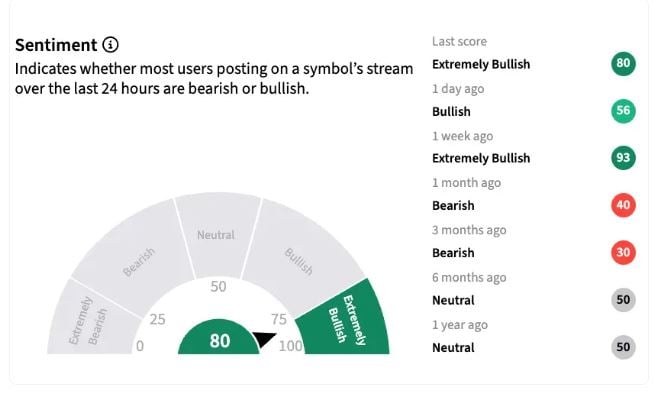
The rally seemed to have been fueled by both post-crash volatility, which was very thin, and speculative trading. In Stocktwits, retail sentiment towards this token changed from “bullish” to “extremely bullish” with social media chatter staying at extremely high levels within just a few days.
Is the rally a Dead-Cat Bounce?
A lot of veteran traders are cautioning about this, highlighting that the rebound to a typical dead-cat bounce; a short lived, false rally after an extreme downward spiral that in fact does not necessarily reflect an actual recovery. This concern is very plausible as there are historical parallels. The native token of FTX experienced numerous dramatic rallies following the fall of the exchange, with each being more of a hype than actual progress.
Similarly, Terra’s LUNC surged between 300% to 500% several times post-collapse, not because of substantive fundamentals but because of narratives of community revival and fantasy. According to many, RAVE is riding on the same boat.
Should you buy RAVE now?
This is probably the most significant question at the moment, and the answer is not at all straightforward. In a risk-reward perspective, the token is in a very uncomfortable position. The unclear manipulation accusations, the very high concentration of tokens, and the fact that the investigations in exchange persist, makes a cloud of doubt that is hard to ignore.
The underlying lack of trust is a significant setback to any comfortable investment thesis until the claims made by ZachXBT are explicitly and openly addressed by the RaveDAO team.
To the long-term investors, the situation appears to be much more difficult. The project is still not proved to be of any real-life use, nor does it have a definite development map or a clear tokenomics model that would warrant accumulation on this scale. It is a significant red flag in itself that a 10,800% increase was made in only nine days with no significant product rollout or any announcement of partnership. Legitimate projects rarely move like that, and when they do, it almost never ends well for retail buyers.
And then there are market dynamics, which are broader. The damage inflicted on the mind of the crash victims may take months to mend. The project has undermined retail confidence, and therefore institutional interest is unlikely due to the issues of manipulation and open exchange investigations may lead to delistings, which would further suppress liquidity. Any one of these factors alone would be a cause for caution; together, they paint a picture that demands serious scrutiny before a single cent is invested.
Conclusion
The story of RAVE is an eye-opener to the rapid shift in fortunes in the crypto market. A meteoric surge to an almost absolute meltdown, followed by a speculative upswing in a few days; this token has condensed decades of classic market drama into only a few days. It is very unclear whether this marks the onset of a real recovery or is merely a dead-cat bounce.
But whatever it may be, the choice of whether to buy the token or not is totally up to you – but it is absolutely crucial that you do your due research before putting even a single rupee on it.
Disclaimer: Crypto products and NFTs are unregulated and can be highly risky. There may be no regulatory recourse for any loss from such transactions.
Frequently Asked Questions
Is crypto legal in India?
Crypto is legal in India, meaning it is not banned, but it is not recognized as legal tender.
Which is the best crypto exchange in India?
SunCrypto is undoubtedly the best crypto exchange in India.
Is SunCrypto safe?
Yes.